
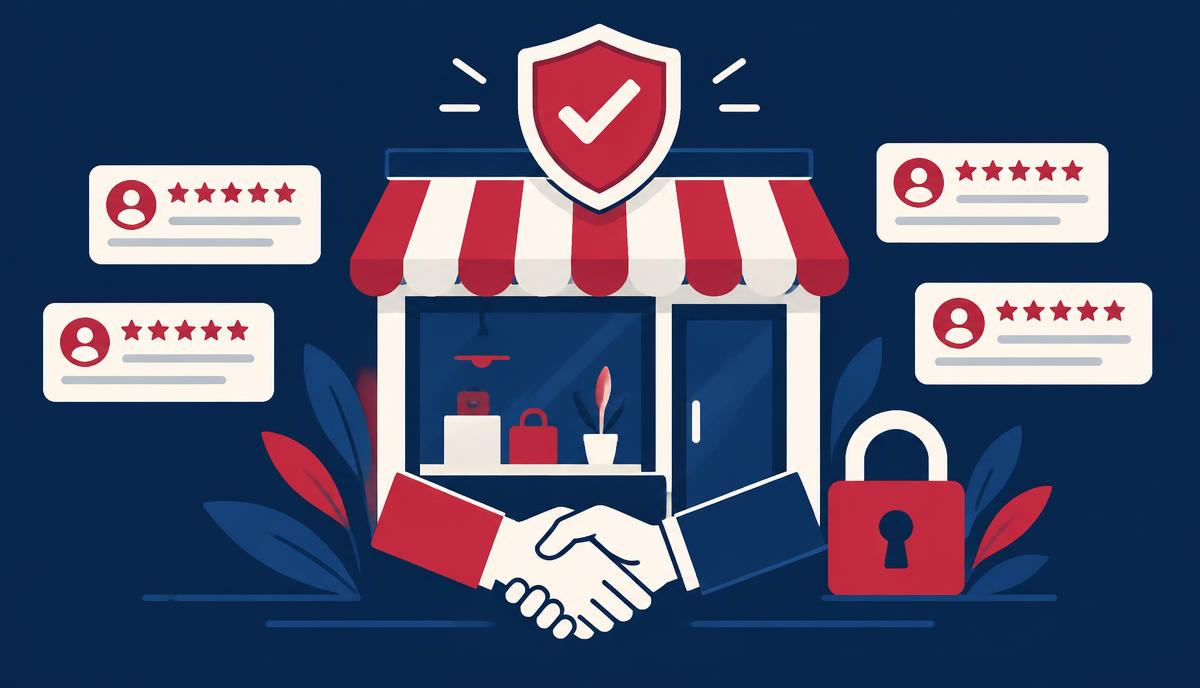
Brand trust develops when a business consistently demonstrates honesty, reliability, transparency and customer care before asking people to make a purchase. For new businesses, strong brand trust signals include genuine customer reviews, clear pricing, secure payments, credible founder information and responsive support. Building trust early helps turn unfamiliar visitors into confident buyers and long-term customers.
What Is Brand Trust, and Why Does It Matter Before a Sale?
Brand trust is a customer's confidence that a business will deliver what it promises, treat them fairly and protect their interests. It develops through repeated interactions, credible information and consistent experiences rather than advertising alone.
For a new brand, earning that confidence is particularly important because customers have little experience to judge the business by. They may question whether the product works, whether the company will deliver on time or whether their money and personal information are safe. The key principle is simple: customers need a reason to believe you before they have a reason to buy from you.
Here is how different trust-building elements contribute to that confidence.
| Trust-building element | What customers look for | How it helps |
|---|---|---|
| Social proof | Genuine reviews and testimonials | Shows other people have experienced the product or service |
| Transparency | Clear pricing, policies and limitations | Reduces uncertainty and hidden surprises |
| Business credibility | Verifiable company and founder information | Makes the business easier to evaluate |
| Product evidence | Demonstrations, samples and case studies | Shows what the product can actually do |
| Security | Secure checkout and responsible data practices | Reduces concerns about payment and privacy |
| Customer support | Accessible contact details and timely responses | Demonstrates accountability when something goes wrong |
These elements work together. A professional website may create a good first impression, but consistent delivery and honest communication are what help sustain trust.
How Can a New Business Build Customer Trust Before Its First Sale?
Building customer trust does not require a large marketing budget or years of brand recognition. It requires making the business easier to understand, verify and evaluate.
1. Be transparent about what you offer
Customers become cautious when a brand makes impressive promises without explaining how it will deliver them.
Describe exactly what your product or service does.
Explain who it is designed for and who may not benefit from it.
Display prices, additional charges, delivery timelines and refund conditions clearly.
Avoid unsupported claims such as guaranteed results, instant growth or risk-free returns.
For example, a startup offering accounting software should demonstrate its reporting features, explain which plans include them and disclose any limitations before customers subscribe. Transparency helps customers make informed decisions instead of feeling pressured into purchasing.
2. Show real evidence instead of making bigger promises
A new brand can establish credibility by showing its work rather than relying on persuasive marketing language.
Publish product demonstrations, sample reports or trial experiences.
Share genuine customer feedback with permission.
Explain how your service works, including the steps involved.
Use case studies that describe the starting problem, the work performed and the actual outcome.
If your business is still pre-revenue, you can demonstrate credibility through a working prototype, transparent product development updates, relevant founder experience or feedback from pilot users. Never present hypothetical results as completed customer successes.
For startups still figuring out how to reach their first buyers, understanding how to acquire your first 100 startup customers can help connect customer discovery, feedback and early proof of value with the process of earning market confidence.
3. Make your business easy to verify
Customers should not have to investigate extensively to determine whether your company is legitimate.
Provide accurate company details, contact information and an accessible support channel.
Introduce the founders and explain their relevant experience.
Maintain consistent business names, logos and contact details across platforms.
Publish clear privacy, delivery, cancellation and refund policies where applicable.
Keep your website updated and remove broken links, outdated offers and contradictory information.
For businesses selling online, these details are especially important because customers cannot physically inspect the company before making a purchase.
4. Treat customer data and payments responsibly
Trust can disappear quickly when customers suspect that their personal information or payment details are not being handled safely.
Use HTTPS and reputable payment providers.
Explain what personal information you collect and why.
Request only the information necessary to provide the service.
Never ask customers to share passwords, payment PINs or one-time passwords through insecure channels.
Make it easy to identify official emails, support accounts and payment instructions.
Security claims should reflect the protections your business actually has in place. A security badge alone cannot compensate for weak practices.
5. Build trust through consistent customer experiences
A brand earns credibility when its actual behaviour matches its promises.
Respond to customer questions within a reasonable timeframe.
Notify buyers promptly about delays or unexpected changes.
Resolve complaints fairly instead of avoiding uncomfortable conversations.
Keep service quality consistent across sales, onboarding and after-sales support.
Admit mistakes and explain how you intend to correct them.
Trust-building also requires operational discipline. For growing startups, reviewing startup operational cost reduction strategies can help businesses improve efficiency without compromising the service quality and customer experience on which their reputation depends.
What Are the Most Important Brand Trust Signals?
Brand trust signals are observable details that help customers judge whether a business is credible, reliable and safe to engage with. They reduce uncertainty, but no single signal guarantees that a company is trustworthy.
Common examples include:
Reputation signals: Independent reviews, credible testimonials and relevant third-party mentions.
Transparency signals: Clear prices, policies, business details and realistic product claims.
Expertise signals: Useful educational content, demonstrable experience and accurate answers to customer questions.
Security signals: Secure connections, reputable payment processing and clear privacy practices.
Accountability signals: Accessible contact information, responsive support and visible complaint-resolution processes.
Consistency signals: Matching brand information, accurate product descriptions and reliable service across channels.
For an early-stage business, prioritise the signals that address its customers' biggest concerns. A business selling financial services may need to emphasise security, qualifications and regulatory compliance, while a consumer product brand may benefit more from product demonstrations, independent reviews and a clear returns policy.
Startups looking for structured guidance on strengthening their foundations can also explore the difference between a startup incubator and an accelerator to understand how these programmes support different stages of business development.
What Are Brand Trust Scores, and Should Businesses Track Them?
Brand trust scores are numerical measures used to estimate how much customers trust a brand. They may come from customer surveys, reputation platforms, proprietary research models or internal customer-experience metrics.
There is no single universal brand trust score that every business uses. Different providers may measure different things, so scores should be interpreted according to their methodology.
Businesses can monitor trust through practical indicators such as:
Customer trust surveys: Ask customers whether they consider the business reliable, honest and transparent.
Review sentiment: Monitor recurring positive and negative themes across customer reviews.
Repeat purchase rate: Measure how many customers return to buy again.
Customer retention: Track how effectively the business maintains customer relationships.
Complaint resolution: Review how quickly and successfully customer problems are addressed.
Referral behaviour: Monitor recommendations and customer-driven enquiries.
These indicators provide useful evidence, but they are not interchangeable. Repeat purchases, for example, can be influenced by price or convenience as well as trust.
A meaningful measurement approach combines direct customer feedback with behavioural data and tracks changes over time.
What Is a Brand Trust Icon? Does It Actually Build Trust?
A brand trust icon is a visual symbol intended to reassure visitors about a business, its security practices or a particular verification status. Examples include a recognised payment-security indicator, a verified business badge or a legitimate certification mark.
However, a trust icon is useful only when its meaning can be verified.
Use certification or verification badges only when your business genuinely qualifies.
Link to the issuing organisation's verification page when possible.
Explain what the badge confirms and what it does not confirm.
Avoid displaying generic security symbols as proof that your entire business has been independently audited.
Never use fake seals, fabricated reviews or misleading verification claims.
A padlock or HTTPS connection indicates that a connection is encrypted; it does not independently establish that a seller is honest or that a product is effective. Customers are more likely to trust a verifiable signal when it is supported by transparent policies and consistent business practices.
How Does Brand Credibility Theory Explain Customer Trust?
Brand credibility theory is commonly associated with the idea that consumers judge whether a brand's claims are believable. Two central dimensions are trustworthiness and expertise.
Trustworthiness: Does the brand appear honest and dependable?
Expertise: Does the brand have the knowledge or capability to deliver what it promises?
A business may demonstrate expertise through product quality, technical knowledge or relevant experience. It demonstrates trustworthiness through transparent claims, fair treatment and reliable delivery. These dimensions explain why a company with polished branding may still struggle to convert visitors into customers. An impressive website can suggest professionalism, but customers also need evidence that the business can deliver and will act in their interests.
For a new business, the practical lesson is to communicate competence without exaggerating experience and to build a reputation through actions that customers can verify.
Frequently asked questions
1. Why is customer trust important?
Customer trust reduces the perceived risk of buying from a business. It can improve conversion rates, encourage repeat purchases, generate referrals and strengthen customer relationships. Without trust, even an attractive offer may fail because customers are uncertain about product quality, payment security or the company's reliability.
2. How does user-generated content build brand trust?
User-generated content (UGC), including customer reviews, product photos, demonstrations and genuine testimonials, helps prospective buyers learn from other people's experiences. It can make a brand feel more credible than advertising alone. Businesses should obtain appropriate permission, disclose incentives where relevant and avoid fabricating or selectively misrepresenting customer feedback.
3. How do attackers exploit brand trust?
Attackers exploit familiar brand names, logos and customer expectations to make fraudulent communications appear legitimate. Common methods include phishing emails, fake customer-support accounts, cloned websites, counterfeit products and fraudulent payment requests. Businesses can reduce these risks by securing official accounts, educating customers about legitimate communication channels and providing a clear way to report impersonation.
4. How can a business build trust online?
A business can build online trust by publishing accurate information, showing genuine reviews, explaining pricing and policies, using secure payment systems and responding consistently to customer questions. Clear founder information, useful product demonstrations and transparent complaint handling also help customers evaluate whether a business deserves their confidence.
5. What makes customers trust a new brand?
Customers are more likely to trust a new brand when it provides credible evidence, communicates honestly, protects customer information and makes its business practices easy to verify. Genuine pilot feedback, relevant founder experience, transparent pricing and reliable support can help establish confidence even before the business has a large customer base.